
The 12th Combat Aviation Brigade (12th CAB) is a significant unit of the United States Army, with a rich history dating back to its formation in 1965. Currently based in Germany, the brigade plays a crucial role in providing aviation support across Europe and Africa.

History and Deployments
The 12th CAB was initially organized as the 12th Aviation Group at Fort Moore, Georgia, on June 18, 1965. It quickly deployed to Vietnam in August of the same year, where it grew to command 11,000 personnel and 34 aviation units by November. Throughout the Vietnam War, the unit played a vital role, earning 18 campaign streamers and several commendations.
After Vietnam, the 12th Aviation Group relocated to Fort Bragg, North Carolina, before moving to Germany in 1979. It was redesignated as the 12th Aviation Brigade in 1987. The brigade has since participated in numerous operations:
- Operations Desert Shield and Desert Storm (1990-1991)
- Operation Provide Comfort (1991-1996)
- Operations Joint Endeavor and Joint Guard (1995)
- Operation Allied Force (1999)
- Operation Iraqi Freedom (2003-2004)
- Operation Enduring Freedom (2005)
- Operation Spartan Shield (2012)
Recent Operations
In May 2012, the 12th CAB deployed five of its seven battalions to Afghanistan, while simultaneously sending one attack battalion to Kuwait. During this deployment, the brigade operated from over 30 different locations, demonstrating its flexibility and operational reach.
Current Organization
As of May 2023, the 12th Combat Aviation Brigade is headquartered at Katterbach Army Airfield in Germany, with subordinate units stationed at Katterbach, Grafenwöhr, and Wiesbaden Army Airfields[1]. The brigade’s current structure includes:
- Headquarters and Headquarters Company
- 1st Battalion (Viper), 3rd Aviation Regiment (Attack Reconnaissance Battalion)
- 1st Battalion (Cougar), 214th Aviation Regiment (General Support Aviation Battalion)
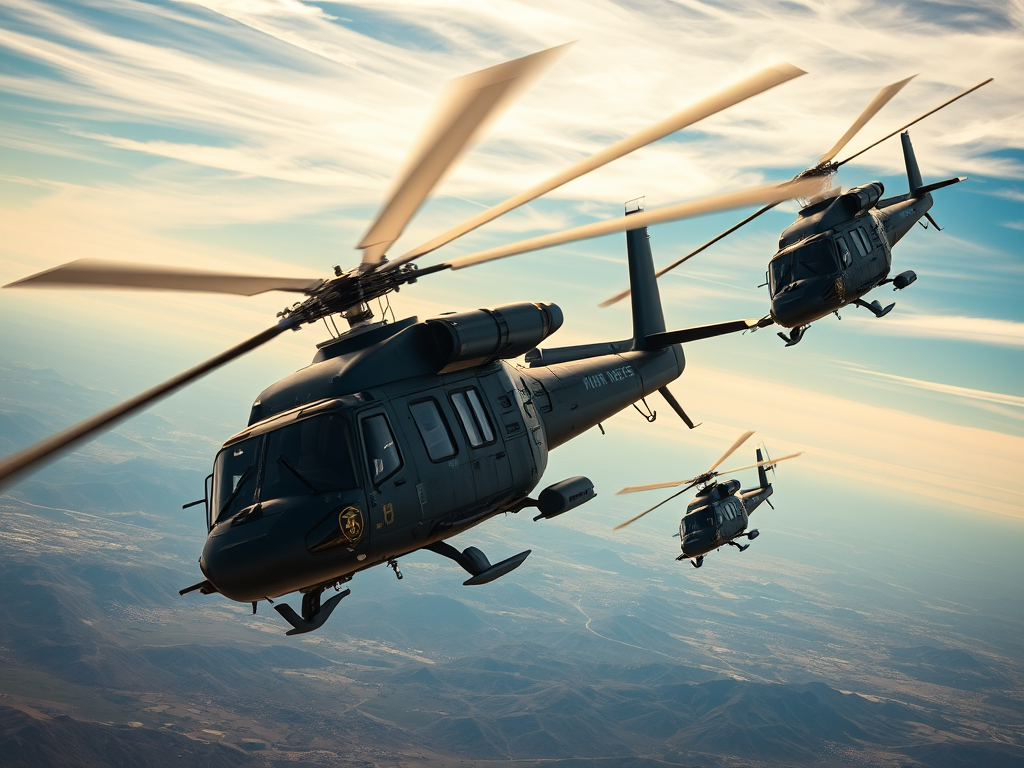
The brigade operates a variety of aircraft, including AH-64E Guardian attack helicopters, UH-60V Black Hawk utility helicopters, CH-47F Chinook heavy lift helicopters, and HH-60M Black Hawk medical evacuation helicopters.
Innovation and Modernization
The 12th CAB is actively involved in modernization efforts. Recently, the brigade partnered with the Army Applications Laboratory (AAL) to launch the Helicopter Expedited Refueling Operations (HERO) project. This initiative aims to address inefficiencies in Forward Arming and Refueling Point (FARP) operations, which are critical for aviation assets in Large Scale Combat Operations.
The HERO project seeks to overcome challenges such as:
- Manpower intensity of FARP operations
- Vulnerability to enemy attacks
- Logistical complexities in austere environments
This collaboration demonstrates the 12th CAB’s commitment to innovation and its role in shaping the future of Army aviation.
The 12th Combat Aviation Brigade continues to uphold its motto, “Wings of Victory,” as it supports U.S. Army operations in Europe and Africa, maintaining readiness for potential contingencies and contributing to the modernization of Army aviation capabilities.
The Army Black Hawk helicopter was on a routine nighttime qualification flight when it collided with American Airlines Flight 5342 near Ronald Reagan Washington National Airport on January 29, 2025[1][2]. This mission was part of an annual assessment aimed at evaluating a pilot’s skills and knowledge in the cockpit.
The flight along the Potomac River was a standard training exercise where an instructor pilot tests a pilot’s ability to navigate the various routes through the Washington area. These routes are crucial parts of the unit’s mission, which primarily involves transporting senior U.S. military officials around the Washington area and beyond.
Key details about the mission include:
- It was conducted by members of Bravo Company, 12th Combat Aviation Battalion, based at Fort Belvoir, Virginia.
- The crew consisted of three experienced soldiers: an instructor pilot, a pilot undergoing evaluation, and a crew chief.
- The flight path was well-known and frequently used by military helicopters in the area.
- The mission was taking place under clear skies
The helicopter was altering its flight path at the time of the collision, which is a routine maneuver in the heavily trafficked airspace over the nation’s capital[3]. However, investigators are focusing on the helicopter’s altitude at the time of the incident, as public data suggests it might have been operating higher than the usual 200-foot limit for helicopters near Reagan National Airport.
This tragic training exercise resulted in a catastrophic collision with the passenger aircraft, leading to the presumed deaths of all 67 people involved – 64 on the commercial jet and 3 on the Black Hawk helicopter.
Specific Upgrades in the FAA’s Emergency Task Force at Newark


Leave a Reply